
Miscellaneous
What is robot-assisted surgery?
St. Joseph’s/Candler adds the latest da Vinci robot to its arsenal of advanced technology for the benefit of our patients
On one side of the operating room, the surgeon is positioned behind the console, gently maneuvering the controllers. Several feet away, enveloping the patient, robotic arms follow the surgeon’s precise actions.
It’s the latest technology in surgery, and it has many benefits to the patient. Called robot-assisted surgery, it helps patients leave the hospital quicker and recover faster.
The da Vinci Surgical System is robot-assisted surgery that is appropriate for a wide array of surgeries from gynecological procedures to cancerous tumor removal to organ removal. It is also state-of-the-art for common surgeries such as gallbladder removal, appendectomies and hernia repair.
Already recognized as the region’s leader in robotic technology, St. Joseph’s/Candler was the first healthcare system in the region to add the latest in robotic surgery with the da Vinci 5 Surgical System.
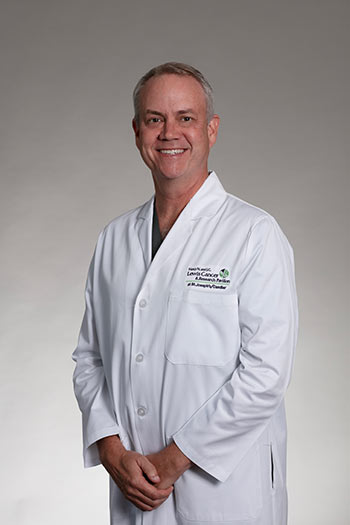 “da Vinci 5 is great. It’s going to be great for esophageal surgery and any chest surgery,” says Dr. Marc Bailey, cardiothoracic surgeon with St. Joseph’s/Candler Physician Network – Cardiothoracic Surgery. “We are working with eight millimeter instruments, even stapling with eight millimeter staplers with the da Vinci 5.”
Additionally, we have six Xi Surgical Systems strategically located across our facilities at Candler Hospital, St. Joseph’s Hospital and our SJ/C Pooler Campus.
“Robotic technology has really become the gold standard for many of these operations,” Dr. Bailey says. “It allows me to remove very large tumors from the lung or mediastinum (the region located between the lungs) without ever spreading a rib or breaking a rib.”
How da Vinci works
The da Vinci robot uses sophisticated computer-aided equipment which allows the surgeon to have the benefit of magnified views of regular laparoscopic surgery while retaining the three-dimensional view of traditional open surgery.
The surgeon sits at a console where their hands are placed into glove-like controllers, called masters, which are used to manipulate the robotic surgical EndoWrist instruments. The on-board computer replicates the surgeon’s movements precisely and to scale while filtering out the surgeons pulse, called tremor, normally seen at high magnification. This allows the surgeon to move in a more natural fashion as opposed to straight stick laparoscopy where the surgeon has to move the instrument left to go right thus reducing the chance of human error.
“Robotic surgery completely changed how I take care of patients,” Dr. Bailey says. “The hospital stay is shorter with small incision surgery. There’s less blood loss. It’s really amazing technology.”
Robot-assisted surgery involves up to five incisions smaller than a penny. This has great benefit for the patient including:
- Less pain
- Less blood loss and potential for transfusions
- A shorter hospital stay
- Faster recovery and quick resumption of normal daily activities
- Move faster to adjuvant therapy, such as chemotherapy or radiation therapy
- Less risk of wound infection
- Better postoperative organ function in the long run
- Less scarring
“These patients used to go to the ICU for a couple of days, have several drains and a spinal catheter for pain and urinary bladder catheters. That’s almost completely eliminated,” Dr. Bailey says. “Most patients are walking right away and two to three days is the average stay, which is less than half of what it used to be.”
Related Article: Why can’t I wear nail polish during surgery?
The da Vinci Surgical System is also beneficial to surgeons. It requires less time, fewer tissues are exposed to potential infection and it requires less post-operative monitoring.
Not all patients qualify for robot-assisted surgery, but if you or a loved one are facing a surgical procedure, talk to your doctor about the potential for robot-assisted surgery. Some common surgical procedures performed robotically include:
- Gynecological procedures, such as prolapse, fibroids and endometriosis
- Prostate removal
- Cancer surgeries
- Full or partial colon removal
- General surgeries such as gallbladder removal, appendectomy and hernia repair
- Kidney removal , or nephrectomy
- Lung surgery, or lobectomy
To learn more about the da Vinci Surgical System, visit our website.