
Heart Health
What is heart failure?
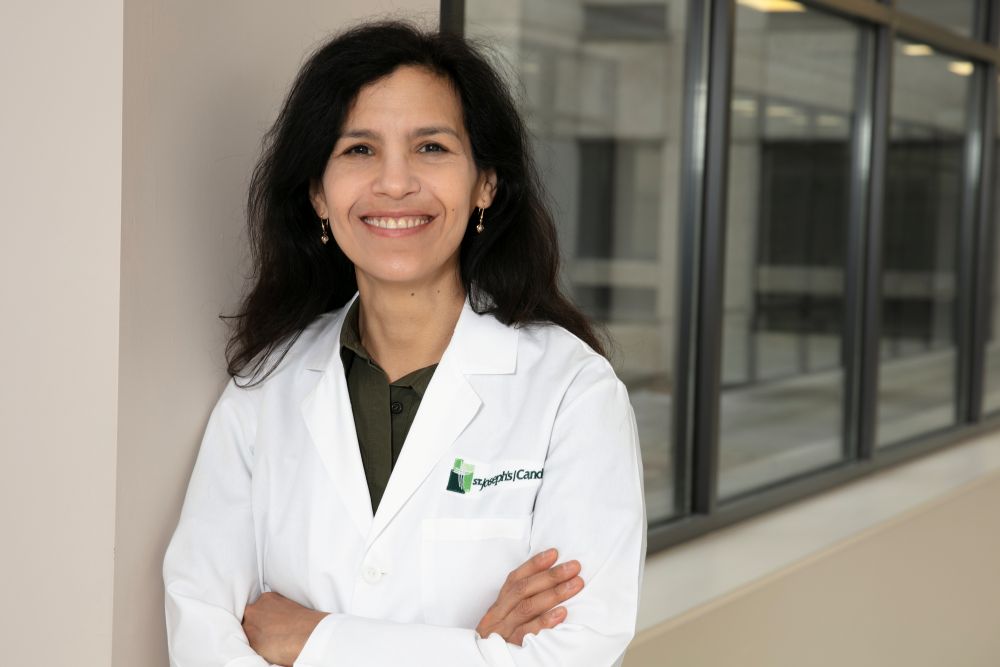
St. Joseph’s/Candler Cardiothoracic Surgeon Dr. Deyanira Prastein explains this very common condition
You may hear the words “heart failure” and think the heart has completely stopped working. That’s not entirely true. Your heart is still working but not at the capacity it should be.
The role of the heart is to pump blood and oxygen to every part of your body. A healthy heart has more than enough pumping capability to properly circulate blood and oxygen.
But when your heart is weak – whether that’s due to a heart attack or genetic condition or abnormal heart valves – it can’t pump enough blood and oxygen throughout the body. That’s heart failure.
“It’s very common and very prevalent, especially as you age,” says Dr. Deyanira Prastein, cardiothoracic surgeon with St. Joseph’s/Candler. “The leading cause of death in the United States is heart disease, and the majority of people who die of heart disease have heart failure.”
What are the risk factors for heart failure?
You may develop heart failure due to:
- High blood pressure
- Diabetes
- Obesity
- A past heart attack
- Heart valve disease
- Coronary artery disease
- Genetic condition or heart defect at birth
- Nicotine and alcohol abuse
Did you know there are stages to heart failure?
Heart failure is a progressive condition, and in most cases, is not curable, but certainly treatable, Dr. Prastein says. The American Heart Association developed four stages of heart failure to help slow progression and manage it. Those stages are:
A – You have risk factors – especially high blood pressure, diabetes or are obese – for one day developing heart failure.
B – You have evidence of structural damage but you do not have any symptoms of heart failure.
C – You have evidence of damage to your heart and are experiencing symptoms of heart failure – shortness of breath, fatigue, chest pain.
D – You have severe disease to the extent that you can’t complete daily activities such as showering or cleaning the house.
“You can have heart failure and be completely functional. That’s why the American Heart Association came up with these stages so that we can identify people who are at risk to prevent them from getting to the severe stages,” Dr. Prastein says.
How do you manage heart failure?
If you are stage A or B, you can reduce your risk of one day developing severe heart failure with lifestyle modifications including eating a healthy diet, exercising regularly, not smoking or vaping, limiting alcohol and getting adequate sleep.
“Unless your heart failure was the result of infection or pregnancy, for most patients, it’s a condition you live with,” Dr. Prastein says. “The emphasis now is that once you develop it, it is progressive, so the goal is to keep it from getting to the advanced C and D stages.”
If you are diagnosed at stage C or D, your healthcare team will look at the severity of your symptoms and functionality. Are your symptoms slight, mild, moderate or severe?
“When you get symptomatic, when you are stage C, we need to classify how functional you are, how limited you are because that guides treatment,” Dr. Prastein says. “We have lots of treatment options depending on your level of function.”
In addition to following a healthy lifestyle, you may treat heart failure with medication, especially if the underlying cause is determined to be due to a pre-existing condition.
If your heart failure is severe and due to a valve problem or other structural defect, then that’s when you’d see a cardiothoracic surgeon such as Dr. Prastein.
“They get to me when they have something they need to repair or fix, such as a bypass due to a blockage or repairing a valve,” Dr. Prastein says.
Or, if their heart muscle is weak and medications are not working, there are certain devices that can be implanted to help make the heart muscle stronger. Two such procedures Dr. Prastein offers include:
- Cardiac-resynchronization therapy: Similar to a pacemaker, it uses electrodes to help synchronize the way the heart beats.
- Neuromodulators: Another device-based intervention that helps stimulate the nerves, which helps regulate the work of the heart.
Can you prevent heart failure?
Absolutely, Dr Prastein says, and it starts with preventive care.
“It’s doing the things we’ve known for decades – proper diet, exercise, not smoking, getting good sleep, all of those things,” Dr. Prastein says. “Heart failure is a diagnosis that makes people very anxious and nervous. It can severely impact your life, but it’s so preventable and so treatable.”
Dr. Prastein also encourages everyone to see a primary care provider at least once a year. They are the frontline of not only diagnosing some of those key risk factors for heart failure, but routinely working with you to try to prevent those conditions.
“We all want to see our kids grow up, graduate, get married. We want to see our grandchildren, but in addition to the longevity part of it, how you live those years is also very important,” Dr. Prastein says. “It’s important not just to be able to live longer, but be able to enjoy whatever number of years God has decided you are going to have and be functional and enjoy your time with your family.”
About Dr. Prastein
Dr. Deyanira Prastein, or “Dee” as she likes to be called, earned her medical degree from Virginia Commonwealth University Medical College of Virginia School of Medicine in Richmond, VA. She did her residency in general surgery at the University of Maryland School of Medicine in Baltimore, MD, and her cardiothoracic surgery training at Wake Forest School of Medicine in Winston Salem, NC. She pursued further training in advanced heart failure surgical therapies with a fellowship in heart & lung transplantation and mechanical circulatory support (ECMO, LVAD, etc.) at the Royal Papworth Hospital in Cambridge, UK, and Duke University Medical Center in Durham, NC.
Dr. Prastein is board certified in cardiothoracic surgery. She is a member of the Society of Thoracic Surgeons and specializes in all aspects of cardiothoracic surgery care including CABG, minimally-invasive valve surgery, TAVR and aortic aneurysms.
She is fluent in English and Spanish.