
Neurology, Heart Health
What are the signs of a stroke?
St. Joseph’s/Candler Neurologist Dr. Hannah Harrison wants you to B.E.F.A.S.T. if you or a loved one experience any of the signs of a stroke
Would you know what to do if you or a loved one were having a stroke?
Every 40 seconds, someone in the United States has a stroke, according to the Centers for Disease Control and Prevention.
If you believe you are having a stroke right now, call 9-1-1 immediately.
A stroke is a disruption of blood flow to certain areas of the brain. The brain constantly needs a supply of oxygen and nutrients in order to work properly. If blood supply is stopped, even for a short time, this can cause problems.
“We’ve come a long way in stroke care. They are not as deadly as they used to be,” says Dr. Hannah Harrison, St. Joseph’s/Candler neurologist. “However, they are still a top cause of disability and many can be prevented.”
Related Article: Infographic: 7 ways to prevent a stroke
Understanding strokes
Stroke is the fifth leading cause of death in the United States, according to the CDC. Around 795,000 people in the U.S. have a stroke each year.
There are two types of strokes: ischemic and hemorrhagic.
An ischemic stroke occurs from loss of blood flow to the brain, usually due to a blood clot, resulting in death of brain tissue. These are the most common types of strokes.
A hemorrhagic stroke occurs when a ruptured blood vessel bleeds into brain tissue, which also causes damage to the brain. These strokes are less common, but are typically deadlier.
There’s also a transient ischemic attack, or TIA, which can often be called a “mini-stroke” by most people. It’s defined as an abrupt temporary blockage of blood flow to the brain. It results in common stroke symptoms which resolve within minutes to hours. These symptoms shouldn’t be ignored, however, as statistics show more than 25 percent of people diagnosed of having a TIA experience another TIA or stroke within the next month. Dr. Harrison strongly recommends anyone experiencing a suspected TIA still immediately get to the hospital.
Related Article: Outsmart stroke: 10 risk factors to watch for
How would I know if I’m having a stroke or a loved one is?
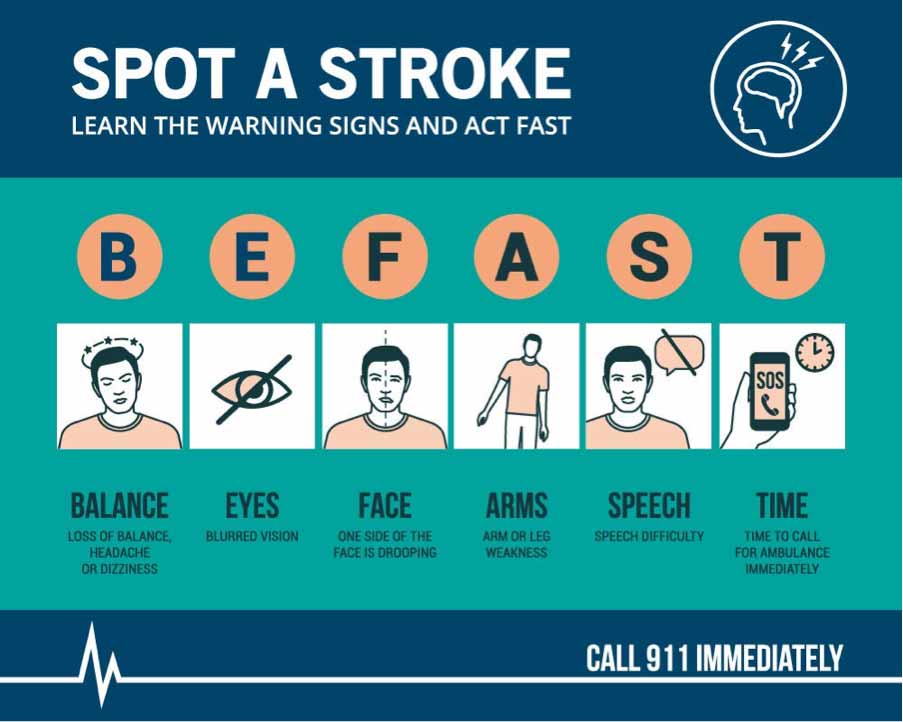
Stroke symptoms can vary depending on the person and the exact location of brain injury. In the past, you were told to think F.A.S.T. when it comes to strokes. Two letters have since been added, asking you to B.E.F.A.S.T.
Look for any of these and get to the hospital immediately if:
B – Balance (a sudden change in coordination and balance)
E – Eyes (a sudden change in vision, such as cloudy vision)
F – Facial drooping
A – Arm drifting, weakness or numbness
S – Speech is slurred or garbled or there’s an inability to speak at all
T – Time – Call 9-1-1 immediately
“Time is brain,” Dr. Harrison says. “Nearly two million neurons die per minute so you should get to the hospital as soon as you notice symptoms come on.”
St. Joseph’s/Candler’s commitment to treating strokes
St. Joseph’s/Candler has been recognized on both state and national levels for our commitment to stroke care excellence and patient outcomes. We are committed to reducing the number of deaths and permanent disabilities caused by stroke.
A stroke team is available 24 hours a day and consists of emergency physicians, neurologists, neurosurgeons, neuroradiologists, neurohospitalists, nurses, therapists and paramedics. We follow the American Heart Association’s Get With The Guidelines – Stroke program, which is the standard of care for treating strokes, Dr. Harrison says.
Those guidelines were updated early this year and include a new window of treatment for people who wake up with stroke symptoms, as well as the approval of a new clot-busting drug.