
Cancer
Six frequently asked questions about colonoscopies
The recommended age to start colon cancer screening is 45 for average-risk individuals
March is colorectal cancer awareness month. But, we encourage you to get screened as soon as you are eligible or when it’s time for a follow-up
If you only had to do something every five or 10 years, and it could help prevent one of the most commonly diagnosed cancers, wouldn’t you do it?
Then it may be time for you to schedule a colonoscopy.
A colonoscopy is where a specialized doctor called a gastroenterologist uses a flexible tube with a camera and light – called a scope – to look inside your large intestine (the rectum and colon). The scope moves from the rectum to the very end of the colon and then is removed to look for polyps in the lining of the colon.
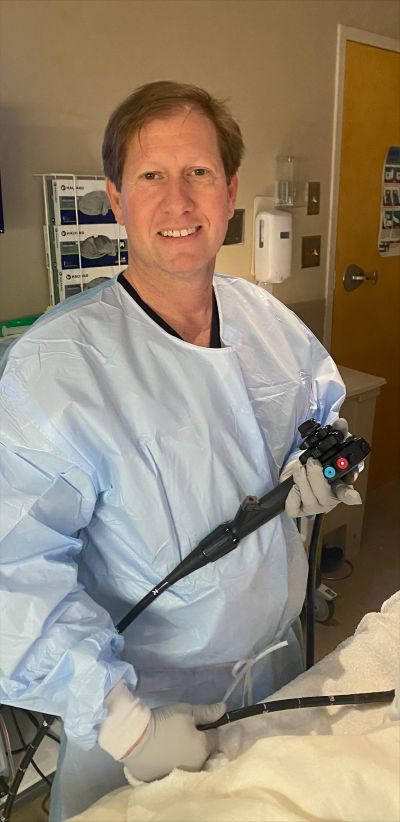
Polyps are small growths that are not typically cancerous but over time can become malignant and lead to colorectal cancer, explains Dr. Gregory Borak, gastroenterologist with Gastroenterology Consultants of Savannah.
“Colon cancer is a very preventable. You just have to get screening in a timely manner,” Dr. Borak says. “We try to identify diseases, like colon cancer, like breast cancer, that have very high incidence rates and find them before they cause problems rather than waiting until you develop symptoms at which point it’s harder to cure.”
Still, we are seeing a sharp increase in colon cancer cases, especially in younger people. That’s one reason why several years ago the American Cancer Society lowered the average-risk age to 45 from 50 to start screening.
“New studies show colon cancer is now the No. 1 cancer death in males under the age of 50, and the second leading cancer death in women under the age of 50,” Dr. Borak says. “The incidence rate is going up about two percent each year.”
“They say by the year 2030 about 25 percent of colon cancers will be in people 50 and younger.”
Related Article: Five ways you can reduce your risk of colorectal cancer
To help better understand the screening process and its importance, Dr. Borak answers some frequently asked questions about colonoscopies:
- When should I begin screening?
If you are average-risk, meaning you don’t have a family history of colon cancer, then the American Cancer Society recommends colonoscopies beginning at age 45. If you do have a family history and your relative was 54 or younger, then you should start screening 10 years younger than the age of diagnosis. - If I don’t have a family history of colon cancer, is it really necessary to get a colonoscopy?
Yes. Colon cancer is so preventable because when polyps are found early, they can be removed before they even turn cancerous. Additionally, if cancer is found early, it’s much more curable.
“If you find colon cancer in someone 45 or older that comes in for average-risk screening, the likelihood that the cancer is confined to the colon is extremely high,” Dr. Borak says. “If you find someone who comes in with 30 pound weight loss or bleeding or belly pain, the likelihood of finding something is higher, but the likelihood of cure is lower.” - What would you say to ease the concerns about the bowel preparation?
One reason people put off colonoscopies: the bowel prep. Dr. Borak admits the prep cleans you out and makes you go to the bathroom a lot, but he also finds patients tolerate it well. In fact, many tell him after the fact they don’t know why they made such a big deal out of the entire experience. Dr. Borak adds that the prep has gotten better over time and is offered in smaller volumes followed by drinking a lot of water. - Does a colonoscopy hurt?
The idea of having a colonoscopy is uncomfortable to a lot of people, but don’t worry, you won’t feel a thing. The average colonoscopy takes 20 minutes, and you will be asleep the whole time. In fact, Dr. Borak says you’ll wake up feeling like you’ve been asleep for 10 hours when it’s only been about 20 minutes. A certified nurse anesthetist or anesthesiologist will administer anesthesia throughout the procedure to ensure you are comfortable and stay asleep. Your vitals and breathing are monitored throughout the procedure and recovery period. - What if you find a polyp during the screening?
When a polyp is identified in the colon, your doctor will use a tool to remove it so it doesn’t grow into cancer later down the road. Any polyps found are then sent to pathology to ensure that it is not cancerous. This process also is not painful to the patient. - How frequently should I get a colonoscopy?
If no polyps are found during screening, then you don’t need another colonoscopy for 10 years. However, if any are found, then it depends on several things including how many are present, how big and how they look under a microscope, Dr. Borak says. Your doctor will also consider your family history and if you are experiencing any symptoms. Based on all those findings, you may need a future colonoscopy anywhere from three to seven years later.
“Finding things before they become problems is really the goal,” Dr. Borak says. “In all of medicine, we want to be preemptive rather than reactive.”
It’s time to Get Your Rear in Gear!
Gastroenterology Consultants of Savannah is the presenting sponsor of St. Joseph’s/Candler’s and the Lewis Cancer & Research Pavilion’s annual Get Your Rear In Gear 5K. This walk/run is part of a nation-wide running series that helps raise awareness about colon cancer. It also raises funds for early detection programs and treatment for patients currently fighting the disease. All the money raised from our Get Your Rear In Gear stays in the Savannah area.
The race is Saturday, March 28 starting at 8:15 a.m. There’s still time to sign up. Visit our website to learn more and sign up now!