
Family Health
What is hematology?
St. Joseph’s/Candler – SC Cancer Specialists Dr. Gregory Haidemenos explains treating non-cancerous blood disorders
Did you know there are hundreds of blood disorders?
That’s why we have specialty-trained doctors – called hematologists – who specialize in studying, diagnosing and treating blood disorders, both benign and malignant. That’s called hematology.
At St. Joseph’s/Candler, our hematologists are also medical oncologists. They do a three-year fellowship in hematology and oncology to treat cancer and also non-cancerous blood conditions.
That being said, not everyone you see walking in the doors of one of our Nancy N. and J.C. Lewis Cancer & Research Pavilion locations has a cancer diagnosis.
“Most of us will do both oncology and hematology as part of our day to day,” says Dr. Gregory Haidemenos, oncologist/hematologist with St. Joseph’s/Candler – SC Cancer Specialists in Bluffton and Hilton Head. “About 20 to 30 percent of patients that we see, it has nothing to do with cancer, and we don’t even have to bring up that word.”
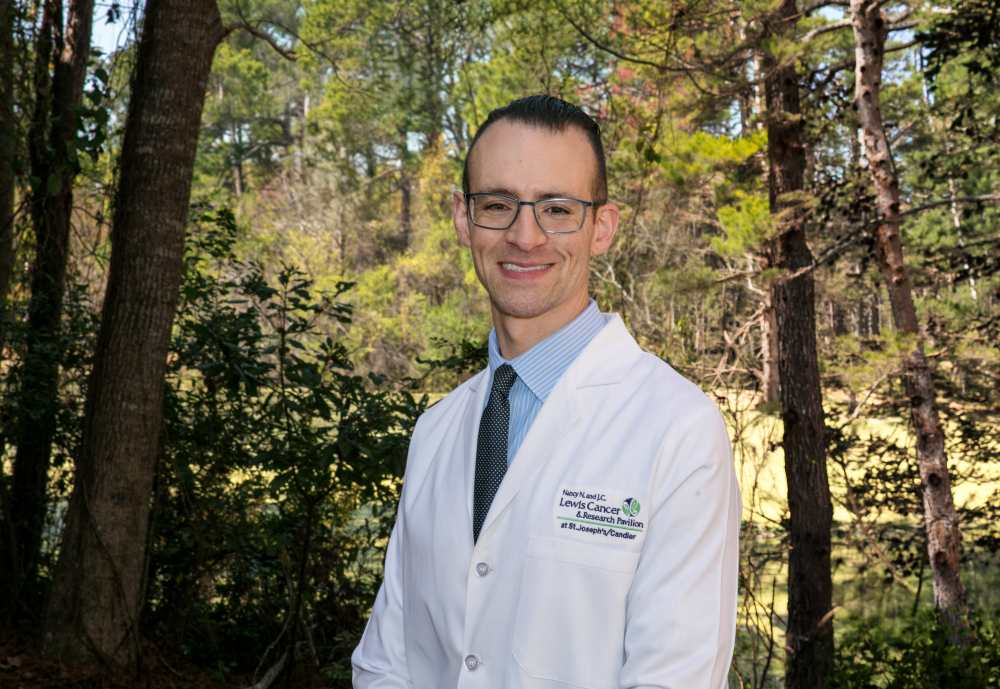
Blood is more complex than you might realize. It’s made up of red blood cells, white blood cells and platelets. Dr. Haidemenos describes it like an organ system just like the skin or heart.
“It requires its own monitoring and assessments,” he says. “It’s our job to find out what the problem is and the best resolution to treat it.”
Some of the conditions that hematologists might help treat include:
- Iron deficiency
- Anemia
- Sickle Cell disease
- Changes in the white blood cells or platelets
- Blood clots
- Atrial fibrillation
- Poor kidney function
Related Article: Six things to know about iron-deficiency anemia
Treatments vary from person to person and disease to disease. It could be a condition that requires something as simple as an iron supplement or multi-vitamin. Or, it could be more intense and require an antibody infusion or a hormone replacement, Dr. Haidemenos says.
The good news is that it’s more common than not that these conditions go away with treatment.
“Most blood conditions we see are either hereditary or things that are sporadic and come and go throughout life,” Dr. Haidemenos says. “Most of the time, something like anemia for example, is not a chronic medical problem. We find the problem, find the fix and resolve it.”