
Orthopedics, Family Health
Certified Athletic Trainers at St. Joseph’s/Candler Urgent Care
Table of Contents
- What are athletic trainers?
- How do you become an athletic trainer?
- Athletic trainers vs personal trainers: What is the difference?
- What do athletic trainers help with at SJ/C Urgent Care locations?
- What are the benefits of having certified athletic trainers at SJ/C urgent care locations?
- Helpful SJ/C services beyond urgent care
- Interview with Joe Winburn, certified athletic trainer
- Athletic trainers elevate the level of expertise for urgent care and Southeast Georgia
When you're dealing with a sports injury, sprain, or musculoskeletal issue, the expertise of those treating you matters just as much as how quickly you're seen. That's why St. Joseph's/Candler employs certified athletic trainers (ATs or ATCs) as part of the care team at five of its 10 urgent care locations, a distinction that sets SJ/C apart from many traditional urgent care providers.
Joe Winburn, certified athletic trainer and clinical administrator at SJ/C, has seen firsthand how this specialized training changes outcomes for patients. Athletic trainers bring hands-on expertise in evaluating and managing orthopedic and sports-related injuries — from ankle sprains to shoulder strains. They work hand-in-hand with the nurse practitioners, physician assistants, and doctors who staff our urgent care locations.
While athletic trainers are mainly associated with sports, anyone can end up hurt and in need of urgent care, whether you are an active individual, student athlete, weekend warrior, or anyone who's twisted a knee or tweaked a muscle.
Key takeaways for this blog are:
- Athletic trainers specialize in preventing, diagnosing, and treating musculoskeletal injuries and conditions
- St. Joseph’s/Candler athletic trainers work hand-in-hand with urgent care providers to identify strains, sprains, concussions, and other injuries.
- Our athletic trainers can refer you to specialized doctors if your injury requires care outside of urgent care.
Read on to learn why this level of expertise matters, and how it helps SJ/C raise the bar for patient care across its urgent care locations.
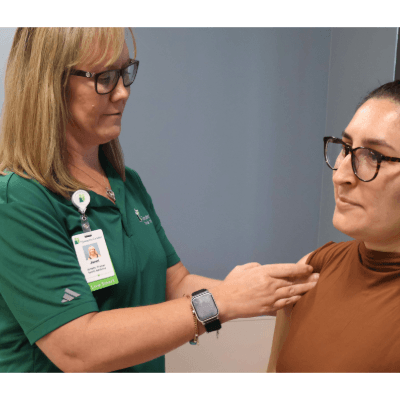
What are athletic trainers?
While the job title speaks for itself, it does not fully encompass the full scope (or impressive skillset) that certified athletic trainers provide for athletes and patients of all ages.
Athletic trainers are healthcare professionals who specialize in preventing, diagnosing, and treating musculoskeletal injuries and conditions — the same types of injuries you'd typically associate with an orthopedic specialist. While ATCs are not a substitute for a doctor, they are far more than only a sideline first-aid provider.
How do you become a certified athletic trainer?
Certified athletic trainers (ATs) complete a master's degree from an accredited athletic training program, pass a rigorous national certification exam through the Board of Certification (BOC), and maintain that certification through ongoing continuing education. Many states, including Georgia, also require ATs to hold a state license to practice.
At the core of that training is an in-depth understanding of how the body actually works. While pain from an injury makes us pay more attention to how we use our body, athletic trainers are well-studied in the muscles, ligaments, tendons, joints and bones that make movement possible, and how they respond to stress, injury and repair.
ATs are trained to recognize subtle signs of strain or instability, distinguish between a minor sprain and a more serious ligament tear, and understand exactly how an injury to one structure — say, a tendon or connective tissue — can affect surrounding muscles and joints before further damage occurs.
That depth of anatomical and biomechanical knowledge allows athletic trainers to evaluate injuries with real precision, not just identify which part hurts. This allows them to work hand-in-hand with our urgent care providers to allow for optimal patient care.
Athletic trainers vs. personal trainers: What is the difference?
It may be a common mix-up, but athletic trainers and personal trainers are not the same. They require different education, serve different purposes, and operate in entirely different scopes of practice. The good news for you is that whether you are in need of the services of an athletic trainer or personal trainer, St. Joseph’s/Candler employs both.
Personal trainers focus on fitness, designing workout programs, coaching exercise technique, and helping clients build strength, endurance, or improve general wellness. Athletic trainers’ scope of practice includes diagnosing and treating injuries, providing emergency and immediate care and guiding patients through clinical rehabilitation.
While a personal trainer helps you get stronger, an athletic trainer has the clinical knowledge to help you recover, heal and safely return to activity after an injury.
Learn more about our personal trainer options available through the Wellness Center at Candler Hospital.
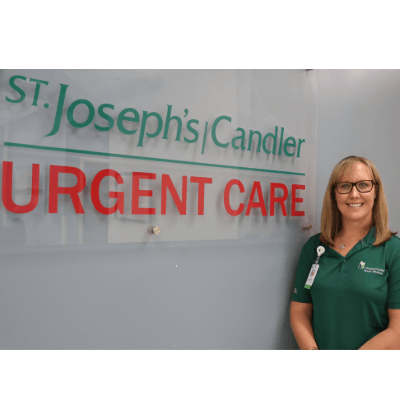
What do athletic trainers help with at SJ/C Urgent Care locations?
Their training covers injury prevention, clinical evaluation and diagnosis, immediate and emergency care, therapeutic intervention and rehabilitation — giving athletic trainers a well-rounded, evidence-based skill set that spans the entire arc of patient recovery.
General patients that athletic trainers treat can range in all sorts of ages, injury types, and locations. St. Joseph’s/Candler certified athletic trainers can be found at:
- Local high schools and colleges: Richmond Hill High School, St. Vincent's Academy, and Savannah State University to name a few
- Certain SJ/C Urgent care locations: the Savannah location, both Pooler locations (the SJ/C Pooler Campus and Canal Street), the Richmond Hill location (Highway 144) and the Rincon location
- The St. Joseph’s/Candler Physician Network – Bone, Joint & Muscle Care office of Dr. Steven Greer
On top of dealing with a wide range of patients, athletic trainers provide a wide range of services as well, including:
- Injury diagnosis (sprains, strains, fractures and tears, to name a few)
- Injury prevention (increasing mobility, stretching and reducing joint or muscle strain)
- Current injury assessments (including concussions)
- Rehabilitation (such as return-to-play criteria, dry needling and post-injury recovery)
- Advocacy and education
Just as young athletes are guided by their coaches to increase their skills, urgent care athletic trainers direct everyday patients towards how to heal their injuries, prevent new ones from occurring, and get back to pain-free movement.
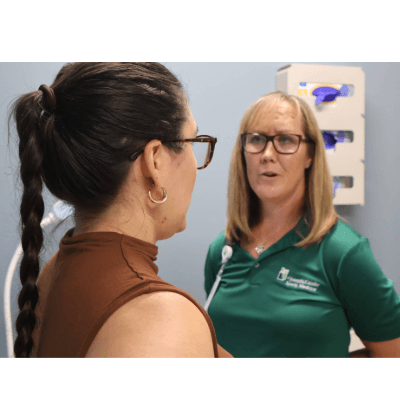
What are the benefits of having certified athletic trainers at SJ/C urgent care locations?
Athletic trainers' unique blend of clinical training and hands-on injury expertise means they can work in conjunction with urgent care providers so patients get a high standard of care, often without the wait or cost of a specialist visit. Key benefits include:
- Faster, more accurate diagnosis — ATs' deep knowledge of muscles, ligaments, tendons and joints allows them to pinpoint the source of an injury quickly and precisely.
- Fewer unnecessary referrals — Because athletic trainers can distinguish between minor and serious injuries on the spot, patients are directed to the appropriate next step the first time, whether that's rest and home care or a referral to the exact specialist they need.
- Injury prevention guidance — Beyond treating the injury in front of them, ATs offer mobility, stretching and strengthening advice to help patients avoid re-injury or future strain.
- Specialized sports and musculoskeletal expertise — ATs bring the same level of injury assessment used at the collegiate and professional sports level directly into a St. Joseph’s/Candler urgent care setting.
- Streamlined path to recovery —Athletic trainers help guide patients toward return-to-play criteria, physical therapy or other rehab services as needed.
- Care for all ages and activity levels — While often associated with athletes, certified athletic trainers at SJ/C regularly treat patients across a wide age range, including everyday injuries unrelated to sports.
- Stronger physician relationships — SJ/C's ATs work closely with physicians and NPs, ensuring smoother handoffs and continuity of care when a patient needs to be seen beyond urgent care.
This combination of precision, prevention, and coordinated care is exactly why SJ/C includes certified athletic trainers as part of its urgent care team, allowing patients to have confidence in the care they receive.
Need aid beyond an athletic trainer? SJ/C can help.
While you are in competent and dedicated hands with certified athletic trainers, sometimes injuries persist or need a deeper level of care beyond an urgent care visit. Besides outpatient rehab and outpatient surgery, SJ/C can help by providing the following services:
- The Center for Rehabilitation
- Occupational Therapy
- Physical Therapy
- Bone Joint and Muscle Care
- Sports Medicine
- The Joint Academy
- Advanced Imaging
- Aquatic Therapy
Take the first step towards treating your bodily injury or pain by making an appointment today with our Bone, Joint and Muscle Care Physician Expert Dr. Steven Greer.
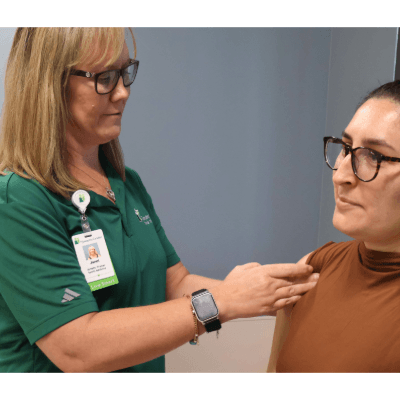
Interview with Joe Winburn, Certified Athletic Trainer
Certified athletic trainers bring a specific skill set to urgent care that directly benefits patients. We sat down with Joe Winburn, certified athletic trainer and clinical administrator at SJ/C, to talk in depth about how athletic trainers strengthen the level of care patients receive at SJ/C's urgent care locations. From injury evaluation to long-term recovery, here's what he had to say about trusting athletic trainers:
SJ/C: How many certified athletic trainers are currently in our urgent cares?
Joe: “We currently have athletic trainers at five SJ/C Urgent Care locations." These are:
- SJ/C Pooler Campus
- Pooler (Canal Street)
- Richmond Hill
- Rincon
- Savannah
SJ/C: Why do we staff ATs at our urgent care offices?
Joe: “We as ATs have good relationships with physicians. We started seeing patients in urgent care, referred them to the physician who we thought was best for their needs. Then, we started adding locations as we saw necessary. The relationship with the NPs and ATs has worked out well. As we are in there, we found out we can do more and more.”
SJ/C: What are some common injuries athletic trainers see in urgent care?
Joe: “We see sprained ankles, knees, shoulders, any joint really. They don’t do a whole lot of X-rays on the neck, but we do see neck injuries from car wrecks. Pain is the one thing that brings patients in. Some people don’t come until they have to. We see some athletes, but that’s usually during the school year. We also see little kids who have some type of fall or something. They do concussions also. They will see them and most likely refer them to Dr. Greer. Sports concussions are treated differently.”
SJ/C: Is it a misconception that ATs can only treat athletes?
Joe: “Yes. The average person, I’d say, is 40ish that we see in urgent cares.”
SJ/C: How do you become a certified athletic trainer?
Joe: "Nowadays you have to have a master’s in athletic training. Georgia Southern has a master’s program, and we have their students come and do shadowing and their clinical part. You have your four years, and then your master’s before you can get certified. You have a national athletic training certification after; you take an exam and then you have to get your state license.”
SJ/C: Do you think it’s unique for a health care system to employ athletic trainers?
Joe: “With all of our athletic trainers, we try to have them practice to the limit of their license. I think that’s a good thing. To look where we were and where we are now, I believe St. Joseph’s/Candler has done a great job of promoting the program and getting us in front of the people we need to help. We are members of the National Athletic Trainers’ Association, and we’ve talked to them about what we are doing in our urgent cares, and they are really impressed with that.”
Find athletic trainers at an SJ/C Urgent Care near you
Certified athletic trainers bring a level of specialized, hands-on expertise to urgent care that's hard to find elsewhere — and as Joe Winburn's insight shows, that expertise translates directly into better outcomes for patients.
Whether you're managing a sports injury, recovering from a strain, or simply want care from a professional trained to understand how the body moves and heals, SJ/C's urgent care locations offer that added layer of confidence.
Schedule an Urgent Care visit or find a St. Joseph's/Candler’s Urgent Care location near you for accessible, high-quality patient care throughout the community.