

Why the da Vinci 5 is the best robotic system yet
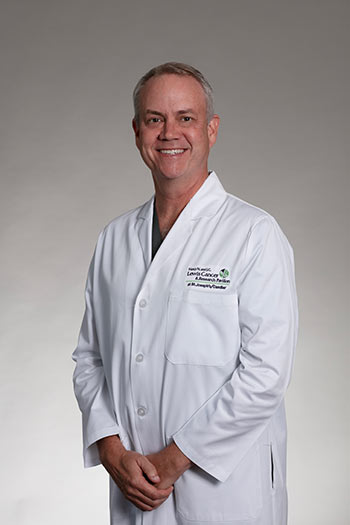
Cardiothoracic Surgeon Dr. Marc Bailey explains the latest in robotic surgery that is available right here at St. Joseph's/Candler
The arrival of the da Vinci robotic surgical system to St. Joseph’s/Candler in November 2007 was a game-changer for Savannah and the surrounding region. Robotic-assisted surgery offered much smaller incisions, a shorter recovery time and less blood loss for patients. These results were achieved through the synthesis of the surgeon’s masterful touch and the robot’s ability to replicate the surgeon’s movements precisely and to scale, while also providing high-definition imaging unlike anything surgeons had seen before.
With such a revolutionary advance in surgery, there appeared to be very little room—or need—for improvement. Yet, after 18 years and more than 14,000 robotic surgeries performed at St. Joseph’s/Candler, another revolution is here. It’s called the da Vinci 5.
While the previous model, the da Vinci Xi, was already a high bar for excellence, the da Vinci 5 introduces a computing capacity more than 10,000 times greater than its predecessor. This was more than an upgrade; it’s a re-engineering aimed at making delicate surgery safer, gentler, and smarter.
As the newest entry to St. Joseph’s/Candler’s arsenal of da Vinci systems, the da Vinci 5 will be used in a variety of minimally-invasive procedures for urology, gynecology and general surgeries such as hernia repair. It will also be used for complex thoracic procedures by cardiothoracic surgeon, Marc Bailey, MD.
“This is the most powerful surgical robot in the world, and we have it here,” Dr. Bailey says. “It has changed how I take care of patients. Robotic surgery has always allowed for smaller incisions and less blood loss, and we can get you walking around faster, with less pain. It was hard to imagine it getting any better, but now it has.”
Using The Force
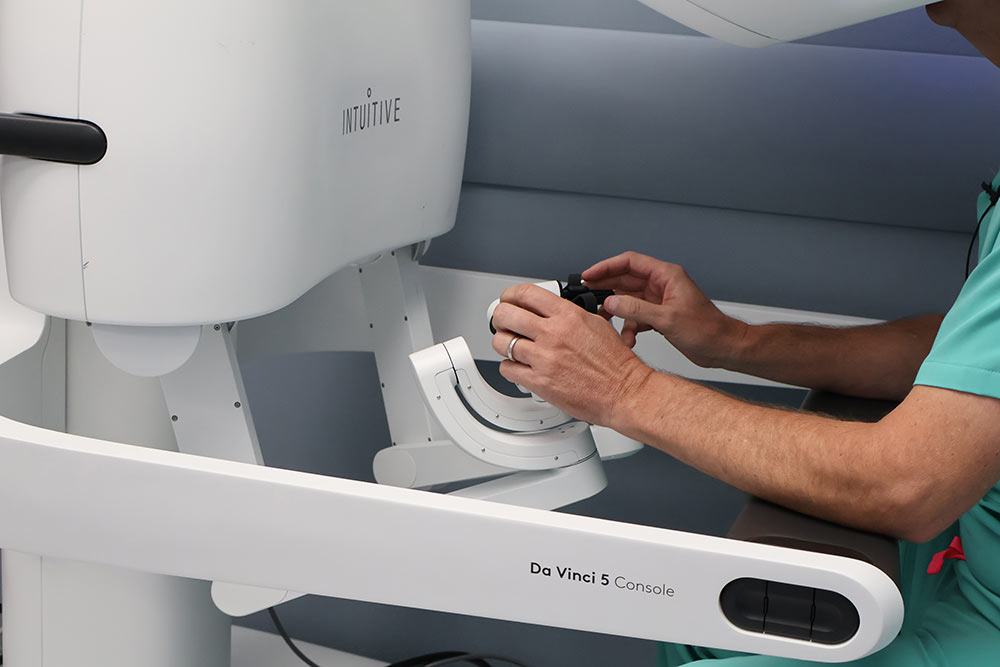
One of the most significant new features of the da Vinci 5 is its Force Feedback technology. Think about how your hands feel when threading a needle or tying a knot—you can feel the resistance, the tension, and the pressure. Previous robotic systems gave the surgeon amazing sight and movement, but they couldn't replicate the sense of touch.
The da Vinci 5 changes that. It uses sophisticated sensors right at the tip of the surgical instruments to measure the exact amount of force being applied to the patient's tissue. This force information is then instantly sent back to the surgeon's controllers at the console. The surgeon can feel the tissue tension and pressure as if their own hands were inside the patient.
In pre-clinical trials, the Force Feedback technology resulted in surgeons using up to 43 percent less force on tissue. That translates to less trauma to surrounding healthy tissue as well. This gentler approach results in reduced inflammation, less post-operative pain, and even faster, more comfortable recoveries. It makes delicate suturing and tissue handling more precise than ever before.
Advanced Insights
The da Vinci 5 boasts the highest quality and most natural 3D imaging system yet. The new display and image processing technology gives the surgeon an incredibly lifelike, highly magnified, three-dimensional view of the surgical area. This improved vision helps the surgeon differentiate tiny blood vessels, nerves, and tissues more accurately. This enhancement is crucial for complex procedures where preserving delicate structures is essential for maintaining the patient's long-term function and quality of life.
The massive boost in the da Vinci 5's computing power allows the system to be much smarter—not just during the operation, but also for future improvements.
The new platform is powered by knowledge of millions of previous surgeries—measuring force, efficiency, and movement. This information is used to help surgeons review their performance, optimize their techniques, and continually improve patient outcomes long after the procedure is done.
Designed For The Future
The da Vinci 5 was also developed with the surgeon’s comfort in mind. It is an obvious yet often undervalued principle in surgery that in order to ensure the best outcome for the patient, the surgeon must feel empowered to do their best work. The da Vinci 5 was designed to be adjustable, allowing surgeons to find their best fit for their console. It can even be set into a completely upright position, with options designed to fit different body types, including surgeons who are pregnant.
All in all, more than 150 design innovations were made in the development of the da Vinci 5, sparking a new revolution in robotic surgical care.
“This system has capabilities that I used to wonder if we would see in the future,” Dr. Bailey says. “But it’s already here. We are in the future now.”
Smart Health, Smart Living - The Latest Delivered to You
Want more health stories on topics that impact the health and wellbeing of you and your family? Learn about new technology, treatment options and how you can live a smarter, healthier life in our Smart Living publication.