
How breast cancer care has evolved
St. Joseph's/Candler Breast Surgeon Dr. Katharine Armstrong explains how the landscape of breast cancer surgery has many more possible paths than ever before
In the past, a breast cancer diagnosis was not only formidable, but it also set most patients on the same path of a singular, aggressive response. Often that meant a radical mastectomy: removing the entire breast, the underlying chest wall muscles, and nearly every lymph node under the arm.
Today, the landscape of breast cancer surgery has many more possible paths.
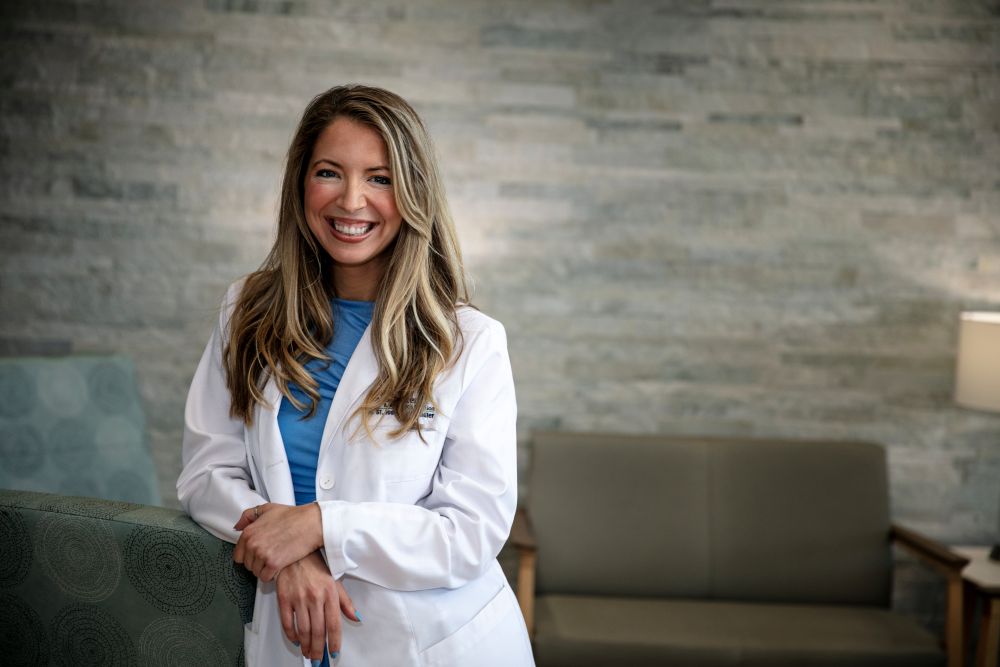
“With a deeper understanding of cancer biology and a commitment to personalized medicine, we have moved away from a one-size-fits-all treatment,” says Katharine A. Armstrong, MD, of Telfair Breast Surgery.
As part of this individualized treatment, Dr. Armstrong will look for opportunities to de-escalate care, which means using the most minimally-invasive approaches and treatments possible without compromising a patient’s safety or long-term survival.
“My hope and goal is that my patients will live for a long time after the treatment we’ve given them,” she says. “I don’t want them to spend that time being reminded that they had cancer whenever they look in the mirror. I want them to feel like themselves again.”
Thoughtful De-Escalation
Breast cancer remains a serious, potentially life-threatening disease, and de-escalation of care is not appropriate for all cases. However, for certain patients, research has shown that less intensive treatments can achieve the same oncologic outcomes while preserving a better quality of life.
“This is thoughtful de-escalation of care, with the same goal of achieving an excellent outcome,” Dr. Armstrong says. “We have to be certain that any surgery, chemotherapy, or radiation therapy we are recommending will provide a definitive survival or recurrence benefit.”
Certain patients with large tumors are one example of this approach. At one time, the only surgery offered to patients with a large tumor was a mastectomy. But depending on a patient’s breast-to-tumor volume, they may be a candidate for a lumpectomy, in which only the tumor and a small margin of healthy tissue is removed. Typically, a lumpectomy is followed (and sometimes preceded) by radiation therapy, but the patient experiences a faster surgical recovery, while the natural shape and contour of the breast is preserved. For early-stage breast cancer, the survival rates for lumpectomies are generally the same as for mastectomies.
“It’s really about the treatment that fits the patient, their goals, and their biology,” Dr. Armstrong says.
Oncoplastic Breast Surgery
When evaluating new patients, Dr. Armstrong will also determine if they are candidates for oncoplastic surgery, which combines tumor removal and plastic surgery within the same procedure. Depending on the goals of the patient, Dr. Armstrong will utilize her own techniques or partner with a plastic surgeon.
“If a patient doesn’t want to be treated by a plastic surgeon, I will choose a scar location that is hidden or the most cosmetically favorable,” she says. “I’ll take the surrounding tissue where I’ve removed the tumor to fill in the defect and rebuild the breast to maintain its normal shape.”
Dr. Armstrong will recommend a consultation and partnership with a plastic surgeon for more extensive or time-intensive treatment plans.
“As surgeons, we strive to preserve the breast's shape and aesthetic as best we can,” she says. “There is a spectrum of options, including reconstruction after a mastectomy or achieving a cosmetically pleasing result after a lumpectomy. Again, our goal is to make sure the treatment we are offering is tailored to the individual patient and their individual tumor.”
New Data, More Options
Many new patients are surprised to learn that they have options. They may have a family member or friend who is a breast cancer survivor and assume that they will receive similar treatment. But in this era of individualized treatment, their own path may be quite different.
“A huge part of new patient visits is educating people about their diagnosis and the different options that are available to them,” Dr. Armstrong says. “My philosophy has always been that it's my job to give patients all of the tools and all of the information they need to be able to make a truly informed decision for themselves about their care.”
Dr. Armstrong has been excited to see her specialty continue to evolve and advance, which has led to even more variations of treatment for her patients.
“Some newer approaches might look different from how a tumor was managed even a few years ago,” she says. “As we acquire new data, breast cancer treatment can change in real time.”
Smart Health, Smart Living - The Latest Delivered to You
Want more health stories on topics that impact the health and wellbeing of you and your family? Learn about new technology, treatment options and how you can live a smarter, healthier life in our Smart Living publication.