

What to expect from radiation therapy
St. Joseph's/Candler Radiation Oncologist Dr. Philip Villiotte explains this treatment option for your cancer diagnosis

Receiving a cancer diagnosis is the first step on a journey that no one is really prepared for. As a patient comes to understand their diagnosis, the next step involves learning about treatment options such as surgery, chemotherapy and radiation therapy.
When radiation therapy is recommended as part of a treatment plan, this can create a specific kind of anxiety for new patients. Simply hearing the word “radiation” may conjure up fears of invisible dangers, intense pain or severe skin burns.
However, the reality of modern radiation oncology has transformed many of these scary ideas into common misconceptions.
“Most people don’t really know what to expect,” explains Philip J. Villiotte, MD, a radiation oncologist at the Nancy N. and J.C. Lewis Cancer & Research Pavilion (LCRP). “They anticipate that it will be painful; they worry about suffering from severe side effects. In our initial consultation, I try to allay these fears. Because, in general, side effects from radiation are less severe than they were in the past.”
How Radiation Therapy Works
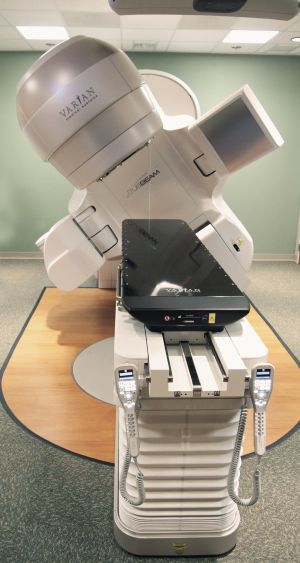
A session of radiation therapy is painless, and a typical daily appointment fits into a 15-minute window. The process is similar to receiving an X-ray: the patient lies on a treatment table in a certain position, while the machine actually rotates around them, sending invisible beams directly to the tumor site. Patients most commonly receive radiation therapy once per weekday for two to nine weeks. For certain patients, more concentrated doses can be delivered in fewer sessions.
“Side effects are dependent upon each patient’s treatment regimen and what part of the body we are treating,” Dr. Villiotte says. He explains that radiation for head and neck cancers can cause a dry or sore mouth, while treating the abdomen may cause nausea or vomiting.
General side effects across all treatments include skin changes and fatigue.
“For many patients, skin changes are often mild, with redness, dryness, and sometimes itching,” Dr. Villiotte says. “The symptoms are similar to a sunburn. Some patients will experience more soreness and peeling than others. We use special creams and moisturizers to help manage these side effects, and we will continue to help you manage side effects all the way through treatment and recovery.”
Accuracy And Precision
Advances in radiation therapy technology have helped to mitigate the severity of side effects for many patients.
“Over time, the technology has improved in both accuracy and precision,” Dr. Villiotte says. “With advanced imaging, we can confirm and target the exact location of the tumor, sparing normal tissue.”
Radiation beams can also be sculpted to match the shape of a tumor.
“The machines can deliver the radiation much more precisely now, so we can customize the doses,” Dr. Villiotte says. “This has given us more power to shape the treatment for each patient.’
A Great Team
Radiation can be used as the primary or singular treatment for some cancer types, such as certain skin cancers, early-stage larynx cancer, prostate cancer and some lymphomas. But the majority of radiation therapy is delivered in close collaboration with surgeons and medical oncologists. This multidisciplinary approach includes regular meetings of the LCRP’s Clinical Effectiveness Teams.
“We’ve got a great team here, with so many dedicated specialists,” Dr Villiotte says. “It’s wonderful to sit down with them and see how we can work together to offer the best, most effective treatment for each patient.”
Treatment plans are tailored not only to a patient’s cancer type and stage, but also to their overall health and personal priorities. While discussing his recommendations, Dr. Villiotte also educates patients and families about what side effects are possible.
“Your opportunity to ask questions is one of the most important parts of the consultation,” he says. “I can address any fears you have about what radiation therapy entails. This helps transform the unknown into a manageable step of your treatment.”Smart Health, Smart Living - The Latest Delivered to You
Want more health stories on topics that impact the health and wellbeing of you and your family? Learn about new technology, treatment options and how you can live a smarter, healthier life in our Smart Living publication.