

What is personalized cancer care?
St. Joseph's/Candler-SC Cancer Specialists Oncologist Dr. Gregory Haidemenos explains how advances in medical oncology have changed treatment options
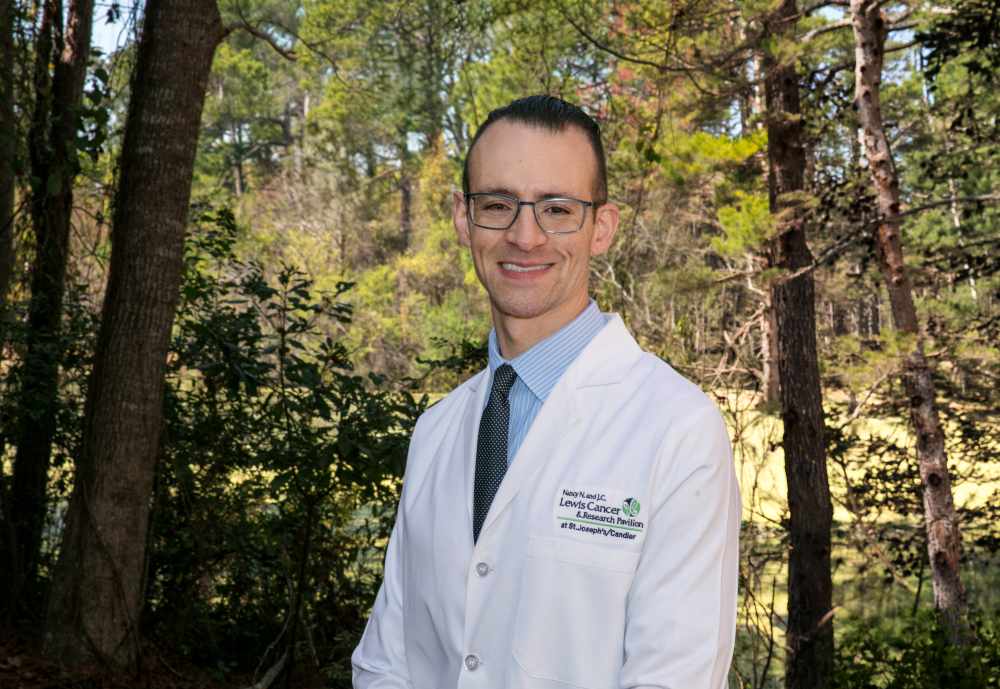
Chemotherapy, in which medications target and destroy rapidly-dividing cancer cells, remains a foundational treatment for certain cancer types, including blood cancers such as leukemia and lymphoma, lung and colorectal cancer. But it is not the only way for medical oncologists to treat patients. In the last decade, dramatic advances in medical oncology have given physicians the ability to provide highly personalized care, which may or may not include chemotherapy.
“To put it simply, we use any medication we can to treat cancer most effectively,” explains medical oncologist Gregory M. Haidemenos, MD. “This includes the full gamut of medication options, such as hormone or endocrine therapy, immunotherapy or targeted therapy that attacks specific DNA mutations.”
When devising a treatment plan, Dr. Haidemenos not only considers the unique characteristics of the cancer type, but of the patient as well.
“A patient’s age, their overall health, their ability to manage side effects, and many other factors are considered in order to tailor treatment to that person,” he says. “Even patients with the same type of cancer will not get the exact same medications, same dosing, or follow the same schedule. The finer details are all based on the person in front of us.”
The Key To Your Care
For some patients, chemotherapy is not part of the conversation.
“Immunotherapy drugs, for example, are not chemo,” Dr. Haidemenos explains. “They don’t kill cancer cells. Instead, they empower the body’s immune system to recognize and attack those cells.”
Hormone or endocrine therapy is used for cancer types that rely on hormones to grow.
“We use this therapy on two of the most common cancers we see, which are breast and prostate,” Dr. Haidemenos says.
Targeted therapy includes a variety of cancer drugs that are designed to interfere with the growth mechanism of specific molecules.
“I tell patients it is a lot like a lock and key,” Dr. Haidemenos says. “If we find a particular genetic mutation, we can deliver a drug that fits and binds to it in the same way that a key fits into a lock and can make it turn.”

For those patients who do need chemotherapy, either primarily or in conjunction with other treatments, Dr. Haidemenos still focuses on tailoring the dosage to minimize side effects.
“Many people’s understanding of chemotherapy is from hearing what a family member went through, or watching a character on TV go through it,” Dr. Haidemenos says. “But that information is often inaccurate or generalized. Our mission is the opposite—to offer personalized care, with your needs and goals as part of that conversation.”
Treating One With Data From Thousands
Ironically, the level of individualized care has risen in recent years through the support of the data gathered from thousands of cases and clinical trials across the country.
“We see cases of breast cancer and prostate cancer on a daily basis,” Dr. Haidemenos says. “The fact that they are so common is a negative, but the positive side of this is that we have collected so much data about what has been effective and successful.”
Decisions made about the patient in front of Dr. Haidemenos can be influenced by the data garnered from 15,000 to 20,000 patients per study.
“If I have a breast cancer patient, for example, the clinical trial data can provide specific details—down to small percentage points—about the differences between my patient’s case and others,” Dr. Haidemenos says. “This helps me determine what the most effective treatment will be. At the same time, I can tailor that treatment to my patient and the unique person that she is.”
Being Proactive
Despite the fast-moving advances in medical oncology, Dr. Haidemenos hopes that patients will stay educated—and work with their primary care physicians—on prevention.
“We always recommend that patients stay on top of screening,” he says. “Talking with your doctor about mammograms, colonoscopies, and skin checks is the best way to be proactive rather than reactive. It’s so important.”
Smart Health, Smart Living - The Latest Delivered to You
Want more health stories on topics that impact the health and wellbeing of you and your family? Learn about new technology, treatment options and how you can live a smarter, healthier life in our Smart Living publication.