

Here's what you should look for with strokes
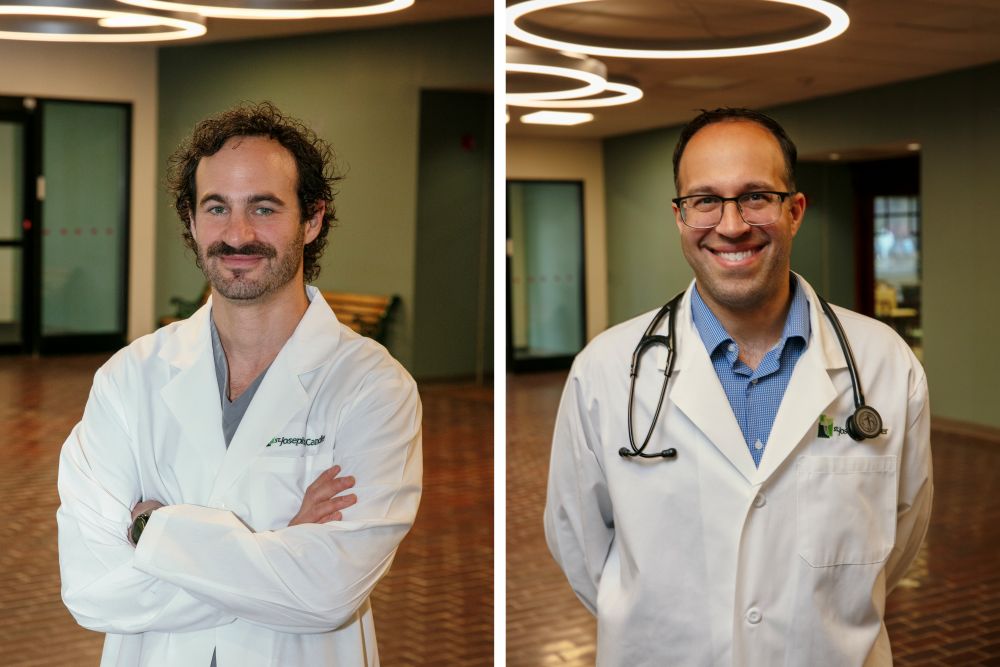
St. Joseph's/Candler providers, Dr. Spencer Adoff and Dr. Brian Raj, tell you the importance of BE FAST when it comes to the signs of a stroke
There are two words that physicians, nurses and staff in emergency medicine want everyone to know: BE FAST.
This phrase is an acronym which helps people remember the signs of a stroke and how to respond. It stands for:
B - Balance: Loss of balance or coordination.
E - Eyes: Loss of vision or double vision.
F - Face: One side of the face droops or is numb.
A - Arm: Weakness or numbness in one arm.
S - Speech: Slurred speech or difficulty speaking.
T - Time: Time to call 911 immediately.
The emphasis on time is deliberate because “time is brain,” meaning that every second counts when it comes to saving brain tissue from the debilitating effects of a stroke.
“The sooner you can get to the emergency department after the onset of your symptoms, the better,” says Spencer Adoff, MD, of Georgia Emergency Associates (pictured above on the left). “If you recognize that something is off, don’t wait to talk to family or friends. Call 911 so that EMS can bring you to the ED. They will call us ahead so that our team is ready for the interventions we need to perform.”
Continue reading below
A Painless Emergency
The two main types of stroke are ischemic stroke and hemorrhagic stroke. An ischemic stroke is caused by a blockage, typically from a blood clot, that interrupts blood flow to the brain. A hemorrhagic stroke occurs when a blood vessel in the brain ruptures, causing blood to leak into brain tissue. Sometimes a hemorrhagic stroke will cause a headache.
But the majority of stroke cases are ischemic, which don’t cause pain. This may be why some patients don’t understand that what they are experiencing is a life-threatening emergency.
“It's very human of us to minimize our symptoms and hope they go away after some time or some rest,” explains neuro-hospitalist Brian Raj, MD, who serves as the medical director for St. Joseph’s/Candler’s stroke care program. “But when it comes to stroke, we need to BE FAST. It’s more than an acronym for identifying symptoms; it is also a reminder of how quickly we need to act.”

Even having a family member drive you to the ED can compromise treatment. Paramedics responding to a 911 call can start care in the ambulance, assessing vital signs and starting an IV. Because EMS is in close communication with the emergency department, the ED team will have the right resources ready on arrival. Patients are treated by an ED physician and nursing team and evaluated by a teleneurologist through video technology. This method has been especially helpful for rural patients, who can be seen at their nearest hospital by a board-certified neurologist through St. Joseph’s/Candler’s Stroke NET-work program.
“This allows quick access to a dedicated team of professionals who can evaluate patients and identify the most beneficial treatment,” Dr. Raj says. “These can be complicated decisions that need to be made as soon as possible.”
No Time To Lose
Patients suffering from ischemic stroke are often given thrombolytics, which are also known as clot-busting medications. These drugs can restore blood flow to brain tissue that is at risk but not yet dead. But thrombolytics cannot help brain tissue that has already died. Research shown that waiting to seek treatment leads to worse outcomes, including higher disability.
“So, please, if you notice any changes in your balance, eyes, face, arms or speech, call 911 so you can get treated right away,” Dr. Raj says.
Dr. Adoff agrees wholeheartedly.
“If you wait to talk to family or friends, or wait until your primary care physician’s office opens to discuss a symptom you’ve noticed, it could be too late,” he says. “If anything is different, physically or mentally, you need to call 911. When it comes to stroke, time is of the essence.”
If you suspect your spouse or loved one is having a stroke, your sense of urgency can help them get help quickly. Learn more in our Ask A Magnet Nurse feature.
Smart Health, Smart Living - The Latest Delivered to You
Want more health stories on topics that impact the health and wellbeing of you and your family? Learn about new technology, treatment options and how you can live a smarter, healthier life in our Smart Living publication.