Share your story
Want to share your cancer journey with us? We'd love to hear it. Please fill out this quick form and someone will be in touch with you soon.

We know cancer takes a toll on your body.
Treatment may require weeks or even months of chemotherapy, immunotherapy, surgery, radiation therapy – or a combination of it all. You may lose your hair, your stamina, your appetite or your voice.
But one thing that doesn’t get talked about enough is the mental battle many cancer patients also face.
That’s why breast cancer survivor Jennifer Pelletier, of Richmond Hill, shares her story.
“When you think of cancer, you think of chemotherapy and losing your hair, being nauseous, etc. But that part happens when everyone is around. That’s when the noise is keeping you busy, and the fight is focused on living,” Jennifer says. “It’s when it gets quiet, and you have to live with the PTSD and trauma of what you just went through that is so hard.”
“Survivorship can be harder than the fight.”
Here’s Jennifer’s journey:
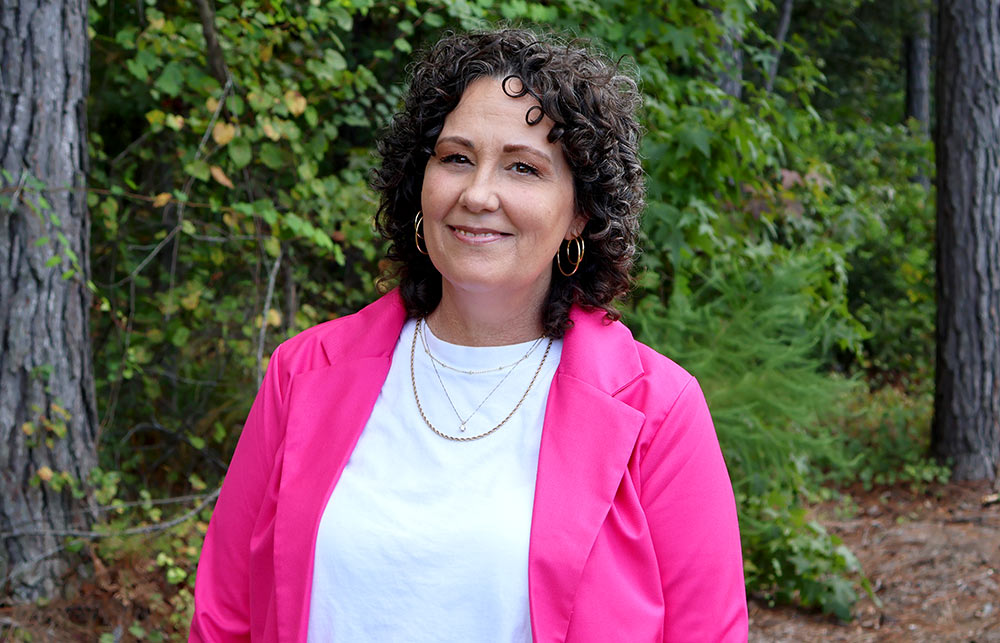
For most of her adult life, Jennifer has experienced death anxiety. It started when she was 22. Her mother had a routine elective surgery, but a week later she developed two blood clots and didn’t survive. Jennifer’s mom was just 44 years old.
“I claimed it – I lived with anxiety. I was still grieving. I was scared to die. I was scared to get sick. I was scared of a lot of things."
Including turning 44, which Jennifer did in December of 2023. That’s also when the hot flashes started, fatigue was more frequent, and she even experienced heart palpitations. Jennifer blamed it on menopause.
Then she found a lump in her left breast one day taking a shower. With a past history of endometriosis that lead to surgery, she thought it was a cyst. Doing her own research on the Internet didn’t help either because she read somewhere cancer doesn’t hurt but this did. It must be a cyst, she thought.
So, she ignored it for more than a month. During this time, she also turned 45. Jennifer had made it through the age of 44.
But it wasn’t four weeks later when she could no longer ignore the lump in her breast. A mammogram, ultrasound and biopsy showed Jennifer had triple negative, invasive ductal carcinoma, stage 2B, grade 3.
“I didn’t have any genetic predisposition. It wasn’t in my family,” Jennifer says. “I was completely blindsided.”
Naturally, the unknown of a cancer diagnosis frightened Jennifer, and her long-time anxiety didn’t help. She thought about a friend who died of breast cancer. She thought of the fear of leaving her teenage son behind. She remembered how difficult it was for her to lose her own mother at a young age.
Then she got some encouraging words from her doctor.
“She said it was beatable. ‘It’s going to be tough; it’s going to be hard, but you got this, and we’re going to beat this,’” Jennifer recalls. “I so desperately needed someone to tell me it was going to be OK.”
“It may sound weird, but I decided, right then the only way to beat it was with positivity and God. I decided I was done being sad. I was done being anxious. I was going to fight this head on.”
And she did – but it wasn’t easy by any means.
Shortly after her diagnosis, Jennifer became at patient of Dr. Mark Taylor with St. Joseph’s/Candler – Summit Cancer Care at the Nancy N. and J.C. Lewis Cancer & Research Pavilion. He introduced her to a clinical trial called Scarlet, that she was eligible for due to her type of breast cancer and stage.
Her treatment started with neoadjuvant chemotherapy (chemotherapy before surgery). She was on the chemo drugs carboplatin and doxetacel, along with the immunotherapy drug Keytruda. Each week after her chemotherapy, she came in daily for fluids and the Neulasta shot, which helps stimulate bone marrow to produce infection-fighting white blood cells.
When she was almost complete with her initial rounds of treatment, Jennifer developed a very uncommon side effect of Keytruda – a very rare type of anemia, which occurs in less than one percent of patients on the drug.
Treatment had to stop and surgery had to be put on hold for three months while she took the steroid Prednisone, had a platelet transfusion and blood transfusions.
“It was bad,” Jennifer recalls. “I was so weak. I could barely walk. I was in a wheelchair for a while. I had to wait longer than most for surgery, which was nerve-racking because triple negative is an aggressive type of breast cancer.”
But, she wasn't alone. Because of her participation in the clinical trial, Jennifer was followed very closely by a clinical research coordinator, which was "another blessing," Jennifer says.
Also a blessing, the steroids worked, and she was ready for surgery. Jennifer opted for a bilateral, or double, mastectomy removing both of her breasts and tissue expanders placed. It wasn’t an easy decision, but then more often than not God shows you a sign.
“I had been asking God what to do because I didn’t know what to do,” Jennifer says. “The MRI revealed I had some tiny calcification spots on my right side, and when they found those three little spots, I felt like that was His way of telling me, that was my sign to go ahead and remove both breasts.”
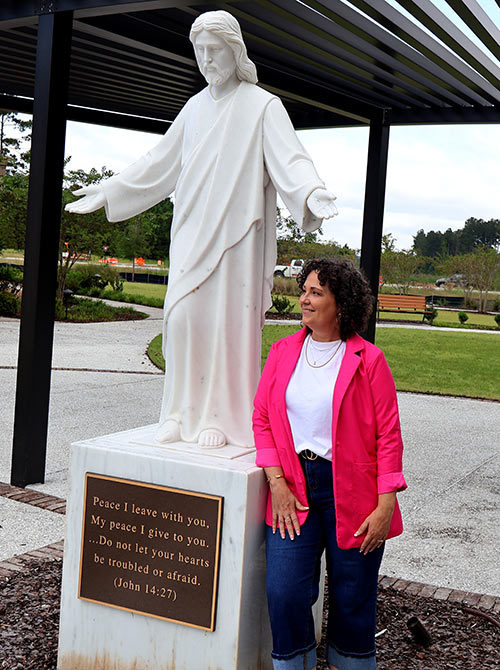
Three months later, she had exchange surgery, which replaces the tissue expanders with breast implants. That didn’t come without pain either, but like her whole journey, Jennifer relied on her faith and took it one day at a time.
“Once I learned to live one day at a time and trust that God had everything in my future figured out, it changed everything,” Jennifer says. “I wasn’t scared to die anymore. I don’t claim death anxiety. It’s gone. Cancer made me better, oddly enough.”
Between the chemotherapy, the immunotherapy she was able to complete and the surgery, all signs of cancer were gone. Initially, she was going to be on Keytruda for a year after surgery, but that was no longer an option.
She’s still watched closely by Dr. Taylor and his team, getting a check-up every three months. She also makes sure to visit the infusion team on the second floor.
“They became family. They are so important to me,” Jennifer says. “They are all angels at the LCRP.”
“I’m proud to say I hit my year in remission mark in August,” says Jennifer, now 46. “I’m mentally doing a lot better but I do want women to know it gets bumpy. If you can find support, find it because it does get bumpy.”
During her bumpy times, Jennifer found support in God, her family and her creative side. She’s a hand lettering artist and spent many days in the chemo chair with her markers and drawing pad. She even made artwork for fellow patients and fun gifts for her nurses.
She hopes, as she continues to get better in her survivorship, to get back to designing beautiful chalkboards and calligraphy.
But more than anything, she wants to continue living – and become a grandmother some day; something her mom never got the opportunity.
“My future is living without fear and anxiety, but with joy,” Jennifer says. “That’s my future, to face each day without being scared to die and knowing I’m tougher than I ever could imagine. Sometimes all you can do is be tough, but I showed myself I have a whole lot of resilience. That was a big deal to me because I needed to learn that.”
Jennifer also plans to continue sharing her story. It’s already inspired friends and neighbors to get their screening mammograms and reach out to her if that unfortunate diagnosis happens. What she tells them is honest and personal:
“My biggest advice is to stay close to God and take it one day at a time. You cannot fight this battle by worrying about what might come,” Jennifer says. “It’s a roller coaster and all of us have different stories. Cancer is not one-size fits all.”
“There are people that make it through cancer and don’t have emotional trauma, and I’m so happy for them, but for others, just know that if you struggle, you’re human. Struggle is to be expected, and sometimes it feels lonely, but just know you will get through this and as hard as it seems right now, there is a light at the end of that tunnel, and there’s a new normal. It might not be the normal you are used to, but there’s a new normal and you will get there.”
Want to share your cancer journey with us? We'd love to hear it. Please fill out this quick form and someone will be in touch with you soon.