Share your story
Want to share your cancer journey with us? We'd love to hear it. Please fill out this quick form and someone will be in touch with you soon.

Taylor Evans may be retired, but he will always be an accountant at heart. His detailed-oriented personality and his love of numbers, may have even saved his life.
The Bluffton/Sun City resident was diagnosed with prostate cancer in late 2024. Today, he’s cancer free after more than a month of daily radiation therapy and participating in a clinical trial at the St. Joseph’s/Candler – Bluffton Campus.
Here’s Taylor’s story.
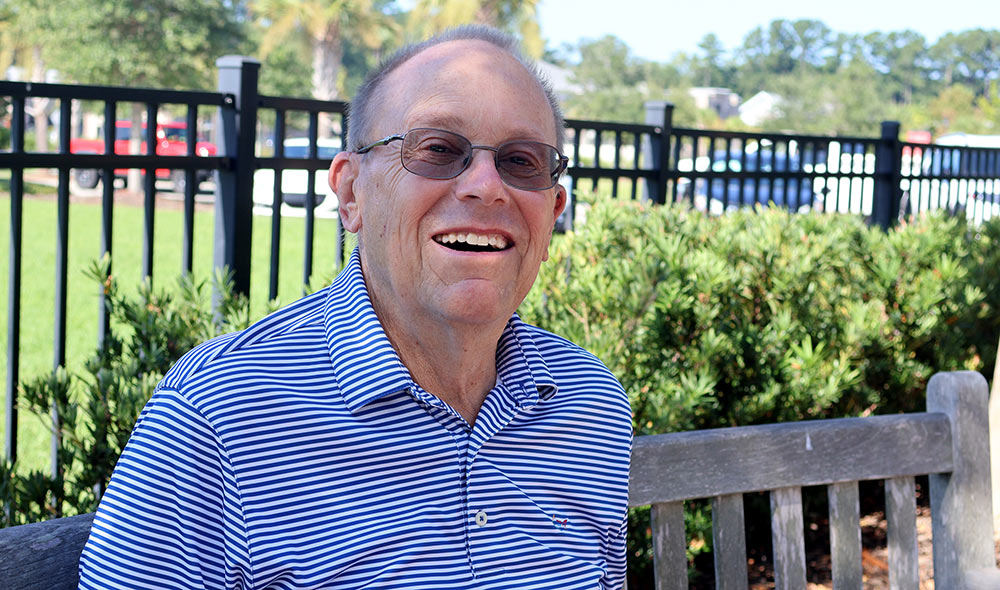
Taylor Evans has always been proactive about his health, starting yearly physicals in his early 20s and never missing an annual exam since. The now 73-year-old, also pays attention to his numbers, including his PSA levels.
PSA stands for prostate-specific antigen, which is a protein made by normal and cancerous cells in the prostate gland. A blood test can help determine a patient’s PSA level (nanograms per milliliter or ng/mL), which needs to be monitored every year or at least every other year for increases.
What your PSA should be ranges by age, but Taylor’s always was low – 1 or maybe 1.4 when he was younger and living in Ohio.
“My doctor said, ‘You’ll never have prostate cancer with these numbers,’” Taylor recalls. “But he did say that it will go up as I age.”
So when Taylor moved to the Bluffton/Sun City area of South Carolina six years ago, he continued his yearly physicals and did see an uptick in his PSA levels. When it reached a 4, which is still below normal for his age, he got concerned and asked his healthcare provider about it, who referred him to a urologist in Bluffton.
Next steps included a CT scan, which showed some concerning results that led to a biopsy. His urologist, Dr. Manuel Perez, then did a biopsy, taking 14 samples – nine came back cancerous.
“He was worried that because I had so many cancerous samples that it might have spread,” Taylor says. “I did a PET scan and remember laying there for an hour. It turned out, thank God, that nothing had metastasized.”
That’s when Dr. Perez referred him to Dr. John Mikell, radiation oncologist with the Nancy N. and J.C. Lewis Cancer & Research Pavilion. Dr. Mikell sees patients weekly at our SJ/C Bluffton Campus.
Prostate cancer is a slow-growing disease that begins when cells in the prostate gland start to grow out of control. About one in eight men will be diagnosed with prostate cancer in their lifetime, according to the American Cancer Society.
While prostate cancer is the second leading cause of cancer death in American men – behind lung cancer – only about one man out of 44 will die from the disease. In fact, more than 3.5 million men in the United States who have been diagnosed with prostate cancer at some point are still alive today, the ACS reports.
As you get older, the chances you may get prostate cancer increase. The average age of men who are first diagnosed with prostate cancer is 67.
After his diagnosis, but learning it had not metastasized, Taylor was ready to face his cancer battle head on. But not after doing his own research.
One of the first calls he made was to the Mayo Clinic in Jacksonville. They told him one of their doctors would be happy to see him, but that all his treatment could be done right there in Bluffton at the LCRP campus.
He then called his sister-in-law who then worked and has since retired from the Cleveland Clinic in Ohio. She told Taylor the same thing.
“So I decided I was going to have my treatment right here close to home,” Taylor says. “I saw Dr. Mikell. It was one of the nicest doctor visits I’ve ever had. I felt very comfortable with him. We went through all the questions and answers. It was great.”
Taylor began daily radiation therapy in April 2025 and finished on the day after Memorial Day. Receiving treatment for that long, Taylor became close to the LCRP co-workers.
“The people in that department where the kindest people I’ve ever worked with in a medical environment,” Taylor says. “Every day, they would greet me, ask me how I was doing. They played the music I wanted to listen to during treatment. That was an absolutely phenomenal experience.”
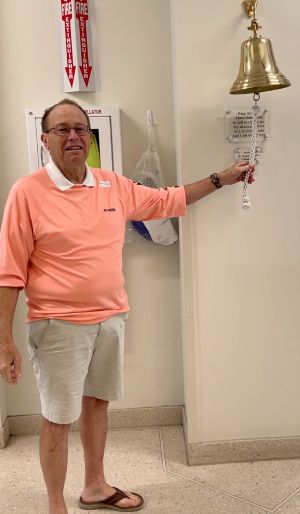
Taylor was so touched by the care he received during his radiation therapy that he brought everyone candy on his last visit. He also got to ring bell, which is a symbol that he was done with radiation therapy.
But Taylor wasn’t quite done with treatment. During the process to decide his course of care, which the LCRP takes a personalized approach to determining, Taylor was asked if he’d be willing to participate in a clinical trial.
“I said, ‘Sure. I’d love to help if someone else gets prostate cancer,’” Taylor recalls.
For his type of prostate cancer, which was considered to be lower intermediate, Taylor was a candidate to participate in a de-escalation clinical trial with intention to see if a reduced dose of androgen deprivation therapy (ADT) has the same results as the full dose.
The current standard of care for Taylor’s type of prostate cancer is radiation therapy followed by two years of ADT. ADT is a type of hormone treatment that lowers testosterone levels to slow or shrink the growth of prostate cancer, which is often fed by testosterone.
His treatment in the clinical trial included radiation therapy but instead of two years of ADT, he just took one year’s worth of shots. While ADT did drastically reduce his testosterone, the side effects were minimal. He also had a lot of support to help him get through his journey.
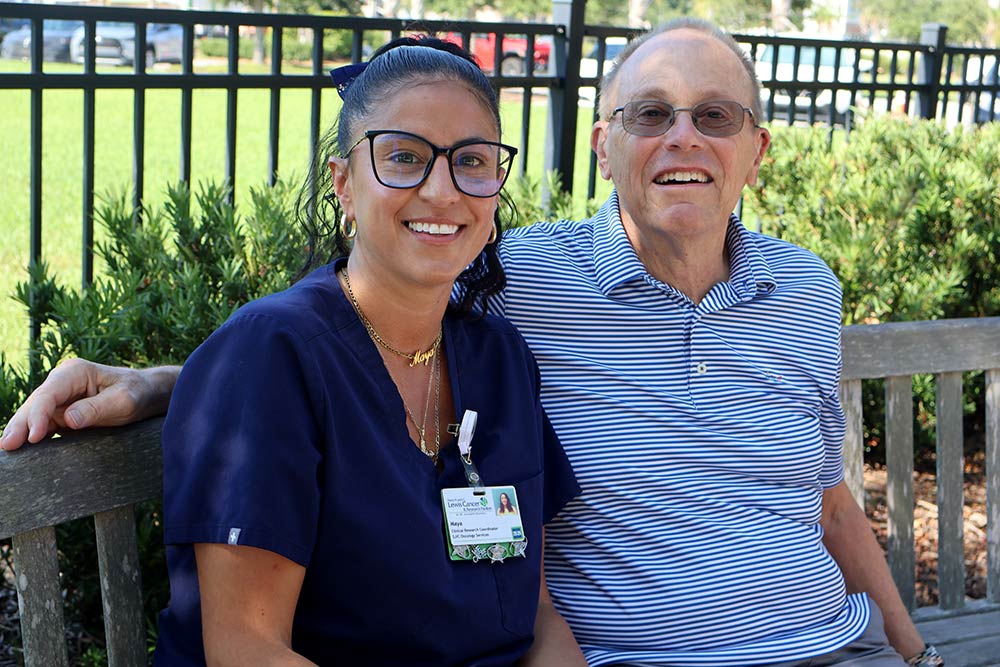
By his side throughout his treatment was Maya Agosto, clinical research coordinator for the LCRP in Bluffton and Hilton Head. She went to appointments with Taylor, answered any questions he had – whether in person or over text – and encouraged him along the way.
“Usually, I get frightened and insecure, but with this, I wasn’t worried,” Taylor says. “What made me feel good was when I found out that it had not metastasized, and they told me I was not going to die from it.”
“That’s why I encourage all men to be proactive about their health. If you catch it early, your odds of survival are better. If you got a health problem, it’s not just going to go away. Go figure out what is going on.”
Today, Taylor is cancer free. His PSA remains almost nonexistent and his testosterone is rebounding.
He is free to enjoy retirement life, whether on the golf course, trying new restaurants with his wife and neighbors or singing in the church choir. He also still has his foot in the numbers world as treasurer of his church and participating on the finance committee for Sun City.
And of course he continues with his yearly physicals, paying attention to those number, which now also includes occasional blood work at the SJ/C Bluffton Campus where he can also say hello to his care team.
“Literally every time I think about what happened here, I want to cry because it was such a phenomenal experience,” Taylor says. “It was absolutely life changing the way I was treated in a medical profession because you keep hearing today about how nobody cares. Everybody here cares.”
Want to share your cancer journey with us? We'd love to hear it. Please fill out this quick form and someone will be in touch with you soon.